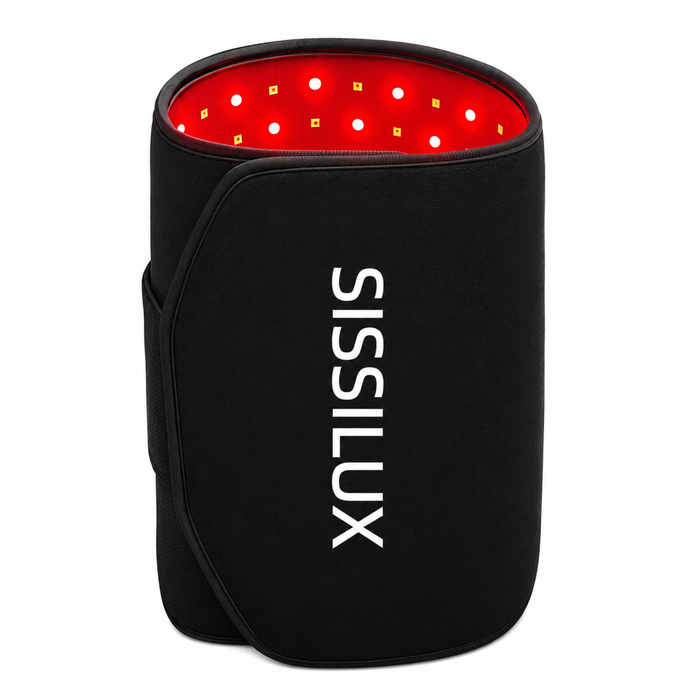
A longer run, extra hills or a change in training can leave the back of your ankle feeling tight and worked. You want a recovery option that reaches that area and fits into the time you already spend resting. That is where a targeted light routine and an adjustable wrap become relevant.
Why consider red light for Achilles recovery?
The Achilles connects your calf muscles to your heel and handles the repeated loading involved in walking, running and jumping. Its recovery involves living tendon cells and the collagen structure that carries that load. AAOS explains the tendon and common Achilles problems.
Photobiomodulation—the research term for this use of light—investigates how red and near-infrared light influence cellular energy and signaling. Mitochondria help cells produce the energy used for their everyday work. Researchers have studied how light can affect those processes and the responses of stressed tissue. That gives light-based recovery a biological purpose beyond simply warming the skin. Read the mechanism review.
Tendon research also includes LEDs. In a 2025 study of injured mouse Achilles tendons, combined red and near-infrared LED exposure improved fiber organization and reduced fibrosis compared with the untreated injury group. These findings help explain the interest in light for the tissue-repair side of tendon recovery.
For a runner, the appeal is a targeted, low-effort addition to recovery time: expose the back of the ankle while you sit, with training load, sleep and progressive strengthening still doing their own jobs. Think about how your ankle feels during ordinary walking and the following morning, rather than judging a session by how bright or warm it feels.
A foot wrap can reach the Achilles—with a different position
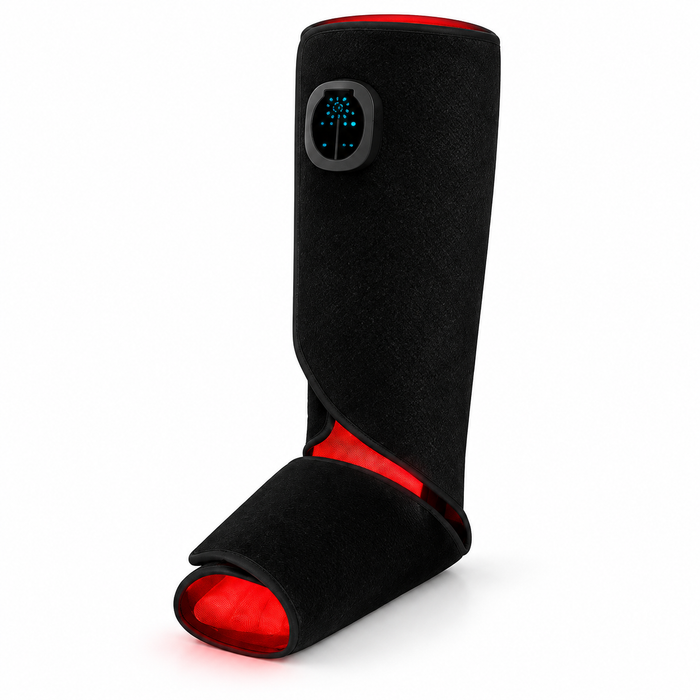
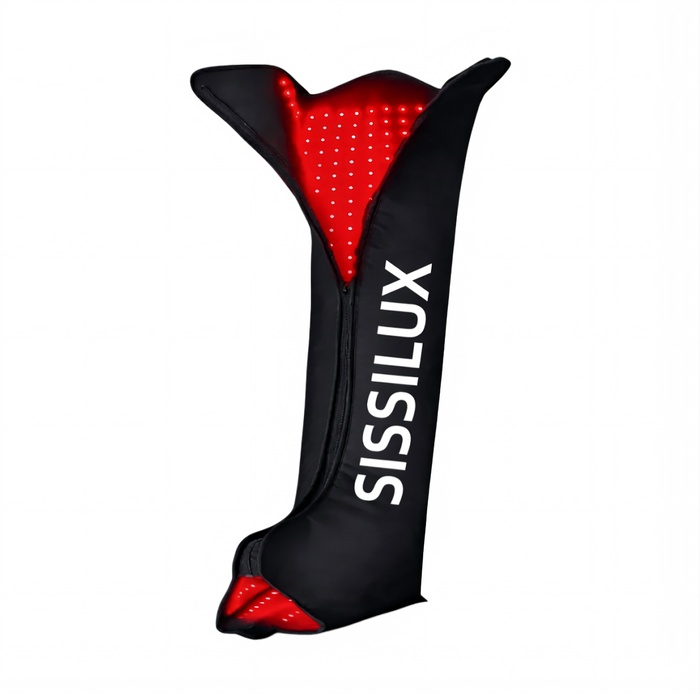
The underside of the heel and the Achilles are different targets. The usual foot position is useful for the sole and heel; an Achilles-focused setup brings the wrap higher around the ankle. SISSILUX has confirmed this adjusted use for SissWrap™ Foot, shown in the photos below.


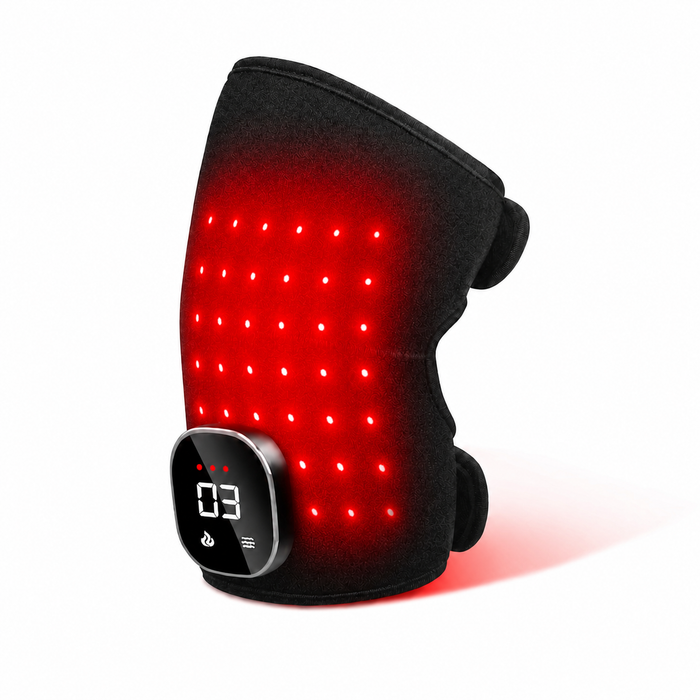
Before fastening, identify the light-emitting surface and align it with the back of the ankle. The illuminated section needs to face the area you want to expose; the position of the controller alone does not show that alignment. Secure the wrap comfortably and keep your foot supported while seated.
Use the settings, session length and frequency supplied for your device. Moving the wrap to a different position is not a reason to invent a longer exposure or copy a laser study's timer.
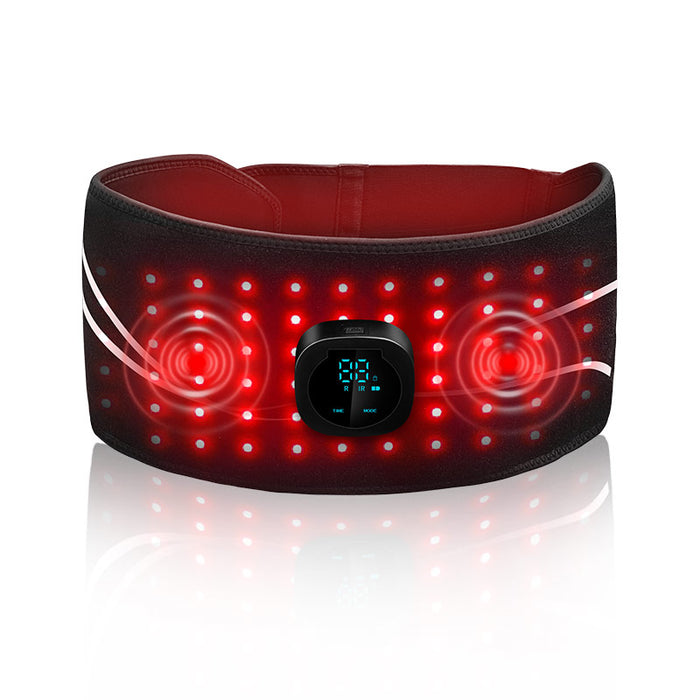
A panel can also be a practical choice if you already own one and can face the posterior ankle toward it at the instructed distance. A wrap is worth considering when fastening the light around the area makes the routine easier to repeat. If broad back or torso coverage is your main goal, a larger device serves a different need. Our wrap-versus-panel guide explains that choice.
Make it part of the recovery time you already have
- Finish the activity and settle into a supported position. Remove your shoe and check the skin where the wrap will sit.
- Adjust for the back of the ankle. Check the emitting surface, comfortable fastening and access to the controls before starting.
- Follow the model's session guidance. Stay awake and seated, then remove the wrap and check the skin afterward.
- Notice the next day's function. Track morning stiffness, ordinary walking comfort and whether your current running load is comfortable to repeat.
If hills or extra mileage repeatedly bring the discomfort back, adjust that load as part of your recovery plan. A light session can fit beside that work; it does not determine how much running your tendon can currently tolerate.
What if you have Achilles tendonitis or persistent pain?
A worked feeling after a run and an ongoing tendon problem call for different decisions. If discomfort keeps returning, changes how you walk or remains between runs, get the cause assessed and build an appropriate loading plan.
For diagnosed midportion Achilles tendinopathy, the 2024 clinical guideline recommends against low-level laser therapy. That is a condition-specific treatment recommendation, rather than a verdict on every LED recovery routine. It is a reason to keep a persistent tendon problem anchored in its rehabilitation plan instead of buying a device as the whole treatment.
A sudden pop, marked weakness or difficulty walking after an injury needs prompt assessment for a possible Achilles rupture.
Choose for the area and routine you want to support
For a seated recovery break focused on the back of the ankle, the useful combination is relevant light, correct alignment and a setup you can comfortably repeat. SissWrap Foot's adjusted position gives you an option for that Achilles-focused routine as well as ordinary foot coverage.
See SissWrap Foot's fit, controls and current purchase options →
Looking for the underside of the heel instead? The foot-pain guide helps distinguish the next question to explore.