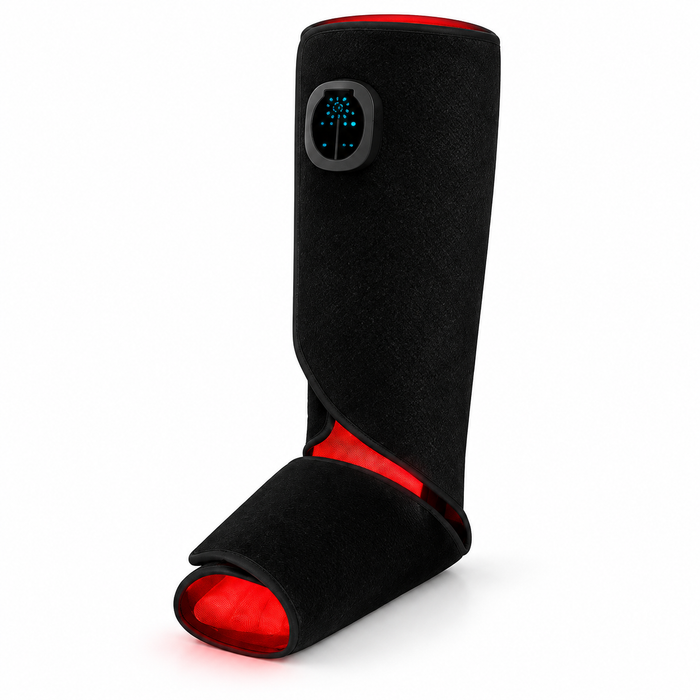
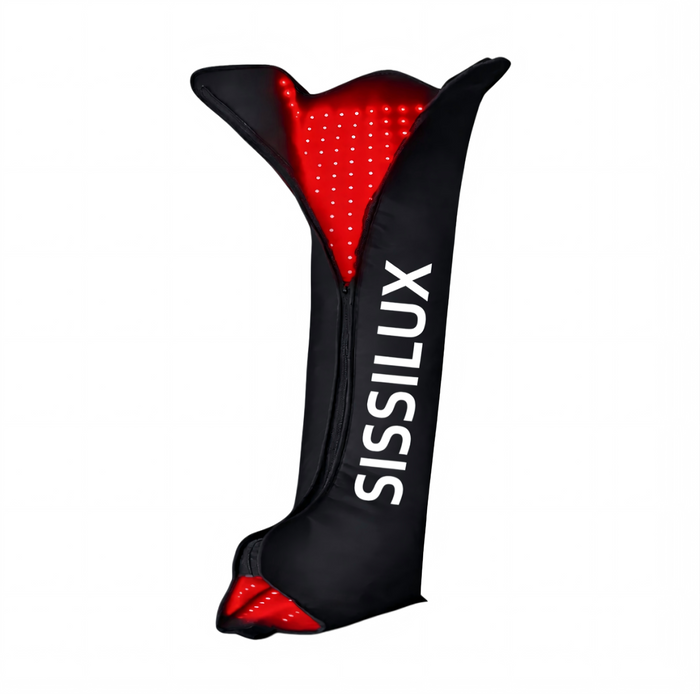
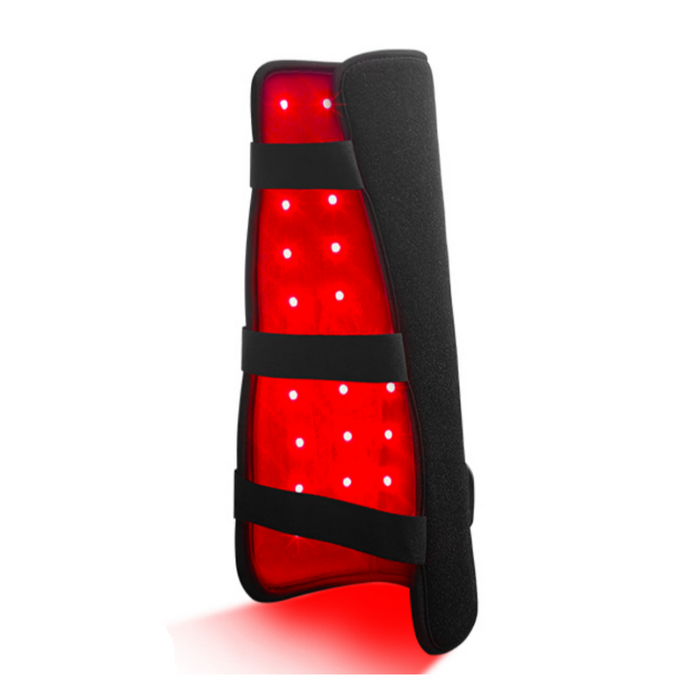
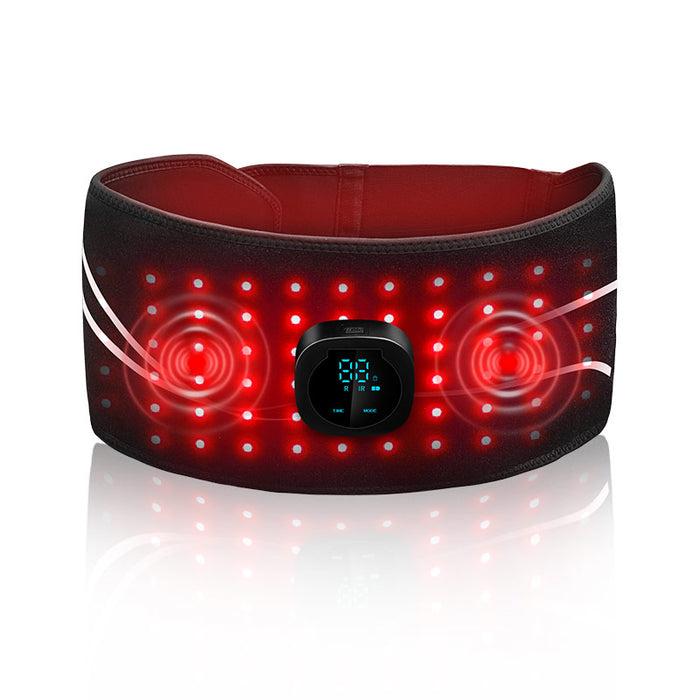
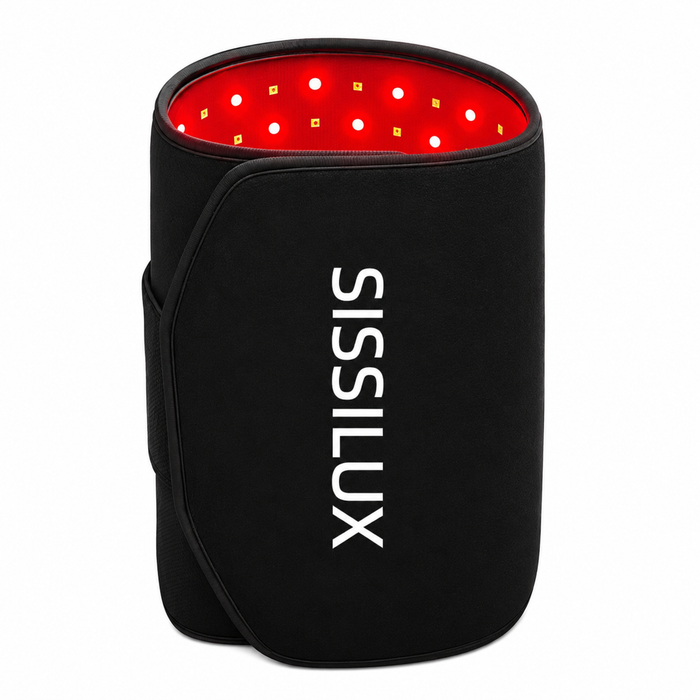
Red and near-infrared light are used in targeted recovery routines to support tissue responses involved in cellular energy and recovery. Choose a wrap when you want the light held around one curved area; choose a larger panel when broader coverage is your priority. The right format makes it easier to expose the intended area consistently.
For a focused knee, shoulder or arm recovery break, SISSILUX SissWrap™ Knee combines red and near-infrared LEDs with adjustable fastening and a rechargeable battery. It holds the light around the selected area while you sit, without arranging a panel in front of you. For the recovery rationale, see the science behind red and near-infrared light.
Match the format to the area
| Your priority | Targeted wrap | Larger panel |
|---|---|---|
| One curved area | Fastens around the area it is designed to fit. | You position the area toward the light. |
| A broad area, such as the back | A small joint wrap needs repositioning and may not suit the area. | A suitably sized panel can illuminate a broader area at once. |
| Session setup | Check fit, fastening, and whether it uses a battery or cable. | Allow room for the device, its support, and the specified operating distance. |
Size still matters within each category. A small tabletop panel is not a full-body setup, and a knee wrap is not a substitute for a large body mat.
Shopping specifically for the heel and sole? Read our foot-focused device comparison before choosing a shape. A wrap that fits a knee should not automatically be assumed to fit a foot.
To see a foot-specific wearable in practice, explore SissWrap Foot’s fit and coverage for a plantar-fasciitis routine.
A larger panel earns its space when you need the coverage
If your priority is a broad area of your back or torso, a larger panel may be the more practical choice. Check its coverage at the distance you will actually use—not just the dimensions of the LED surface.
Plan where you will sit or stand and how the panel will be supported. Follow the model’s instructions for distance and session length; panel manufacturers such as Mito Red Light provide model-specific usage guidance. Do not transfer a panel’s settings to a wrap.
Is a panel more powerful than a wrap?
Higher electrical wattage does not tell you how much light reaches each patch of skin. Compare irradiance—the light power delivered per unit area—at the intended use distance, alongside coverage and session time. An output figure measured at the LEDs is not directly comparable with one measured several inches away.
Research on accurate light measurement explains why measurement methods and exposure parameters matter. A larger wattage number alone is not enough to establish better treatment results.
Does a close-fitting wrap work better?
A well-fitted wrap holds its emitting surface around the selected area, helping you maintain alignment during a targeted recovery session. A panel asks you to keep the area facing it at the specified distance. Compare the illuminated area and the operating instructions for the setup you intend to use.
Check the fit and follow the device’s own instructions. Do not tighten a wrap or extend a session on the assumption that closer or longer must be better.
Can a wrap replace a panel?
For a focused routine, a wrap can be your main light setup. If your goal is one knee, a suitably fitted wearable supplies targeted coverage without allocating space to a larger panel.
If you already use a panel for your back and torso, a small knee wrap will not replace that coverage. And if your existing panel already suits your needs, you do not need a second device just to own both formats.
Buy for the routine you need
Compare the complete recovery setup: the illuminated area, fit or support, usable instructions and any required accessories. Those details determine whether a device suits the sessions you want to repeat.
For a focused knee, shoulder or arm routine, check SissWrap Knee’s current price, fit and controls.
Compare the setup, not just the light source
| Constraint | What changes the choice |
|---|---|
| You already own a panel | Check whether its instructed position keeps the target facing the light comfortably; a wrap is useful when fastening the emitting surface around the area makes the session easier to maintain. |
| Several broad body areas | A panel may avoid buying several small wearables, if you have room for its support and distance. |
| One curved area while seated | A well-fitting wrap can reduce repositioning; confirm illuminated coverage rather than the outer fabric size. |