If you have narrowed your search to Lunix LX3 and LX7, the next question is practical: what changes when you sit down and operate them? A higher model number alone is not a useful buying reason.
SISSILUX prepared this comparison from the official model pages checked October 13, 2026. It is a comparison of published specifications, not a hands-on trial. We include our SissGlove™ Classic as a third option for shoppers who want a direct heat-and-compression routine.
LX3 and LX7: compare the controls first
| Choice | Lunix LX3 | Lunix LX7 |
|---|---|---|
| Interface | Conventional control layout | LCD touchscreen |
| Programs | 6 massage modes | 4 program modes |
| Intensity | 6 levels | 6 levels |
| Core format | Heated air compression | Heated air compression |
| Power | Cordless and rechargeable | Cordless and rechargeable |
See the official LX3 listing and LX7 listing for the current configurations.
Choose LX7 for the interface—not simply the number
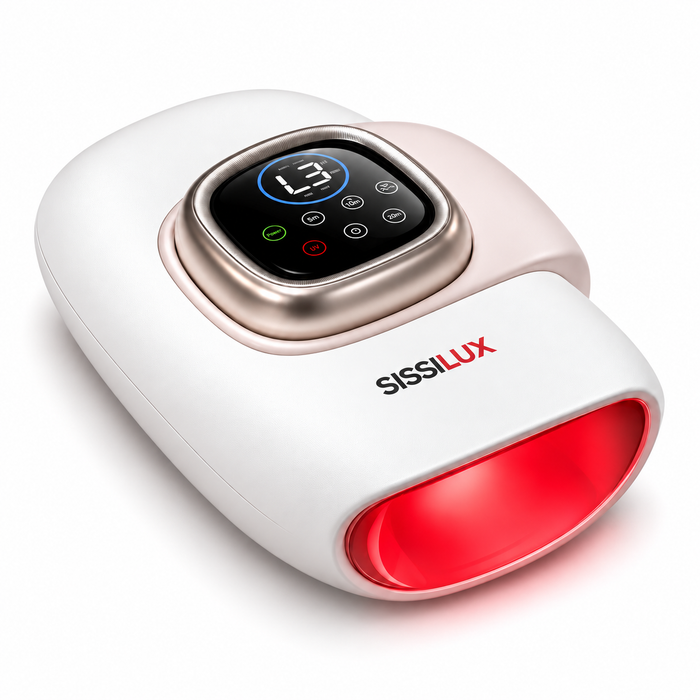
A touchscreen is a meaningful feature if you prefer an on-screen control layout. Before deciding, enlarge the panel image and locate the setting you will use most often. Consider whether you can read it from your seated position and operate it with your free hand.
The interface is worth paying attention to because it is part of every session. If you strongly prefer conventional controls, a touchscreen upgrade may be less compelling than it initially sounds.
Choose LX3 if you want more patterns to explore
Massage patterns and pressure levels are separate choices. A pattern changes the sequence; intensity changes the squeeze. LX3's larger advertised mode selection is relevant if you like changing the sequence. For someone who usually keeps one setting, the extra patterns may have less everyday importance.
Both models advertise warming air compression. This comparison therefore turns mainly on how you want to control and vary that experience, rather than a fundamentally different kind of massage.
Another option if your goal is a simple repeatable break
If you want more attention around individual fingers, SissGlove™ Elite offers independent finger massage, 3D wrap coverage and dual-zone heating. Inspect that physical design alongside the Lunix control layouts; it is a different reason to choose, rather than simply adding another screen to the comparison.
Before you make the choice
- Decide whether you prefer conventional controls or a touchscreen.
- Look at hand placement and make sure the arrangement suits you.
- Choose the program variety you expect to use.
- Compare the current offer for that exact model and color on its product page.
Explore Classic’s current offer or return to our hand massager comparison if you are still open to other layouts. Our CINCOM vs Lunix guide covers the split-finger alternative.