


The Process of How Light Energizes Your Cells
-

01 Light Absorption at the Cellular Level
Red and near-infrared light are absorbed by cytochrome c oxidase (CCO), a key mitochondrial protein that powers cellular energy production.
-

02 ATP Production is Activated
When CCO absorbs light, it boosts ATP production, fueling the electron transport chain to convert oxygen and nutrients into energy.
-

03 Cellular Recovery is Enhanced
More ATP activates cellular signals that enhance collagen production, reduce inflammation, and promote overall healthier skin.


Science-Backed Benefits of Different Wavelengths
Discover All the Benefits
Full-Body Benefits of Red Light Therapy—from Head to Toe.
Pain is a common symptom of various health issues and a leading cause of medical visits. While traditional treatments like medications and nerve blocks have limitations, light therapy offers a proven, non-invasive, and affordable alternative with minimal side effects and high safety.
Light therapy alleviates pain by modulating neurotransmitter release, reducing pain signals, and lowering brain excitability. It also promotes the release of pain-relieving substances, offering mild but lasting relief. Furthermore, light therapy improves blood circulation, delivering oxygen and nutrients more efficiently to the affected area, accelerating waste removal, and reducing inflammation-related pain.
This makes light therapy effective not only for acute injuries, such as sports-related or post-surgical pain, but also for chronic pain in joints and nerves. As a sustainable, healthy form of pain management, light therapy helps restore the body to its optimal state.
Reference
1.Low-intensity LASER and LED (photobiomodulation therapy) for pain control of the most common musculoskeletal conditions
DE Oliveira MF, Johnson DS, Demchak T, Tomazoni SS, Leal-Junior EC.
Eur J Phys Rehabil Med. 2022 Apr; 58(2): 282-289.
2.Low-Level Laser Therapy for Fibromyalgia: A Systematic Review and Meta-Analysis
Yeh SW, Hong CH, Shih MC, Tam KW, Huang YH, Kuan YC.
Pain Physician. 2019 May; 22(3): 241-254.
3.Light-emitting diode phototherapy: pain relief and underlying mechanisms
Zhang WW, Wang XY, Chu YX, Wang YQ.
Lasers Med Sci. 2022 Jul; 37(5): 2343-2352.
4.The efficacy of low-level laser therapy for shoulder tendinopathy: a systematic review and meta-analysis of randomized controlled trials
Haslerud S, Magnussen LH, Joensen J, Lopes-Martins RA, Bjordal JM.
Physiother Res Int. 2015 Jun; 20(2): 108-25.
5.The associations between diode laser (810 nm) therapy and chronic wound healing and pain relief: Light into the chronic wound patient's life
Tang D, Liu C, Chen X, Lv X, Yuan L, Xue D, Song H.
Wound Repair Regen. 2023 Mar; 31(2): 227-232.
Inflammation is a natural defense against infection, injury, or irritation, but when excessive or prolonged, it can lead to chronic pain, tissue damage, and accelerated aging.
Light therapy inhibits inflammation through multiple mechanisms: it reduces the release of pro-inflammatory factors, lowers cellular sensitivity to inflammatory stimuli, and helps clear harmful byproducts. This promotes a balanced healing process.
Since inflammation often stems from immune system imbalances, light therapy also regulates immune cell activity, preventing excessive or chronic inflammation. Its ability to restore immune balance makes it effective for both acute and long-term inflammatory conditions, providing a non-invasive, science-backed approach to healing and relief.
Reference
1.Mechanisms and applications of the anti-inflammatory effects of photobiomodulation.
Hamblin MR.
AIMS Biophys. 2017; 4(3): 337-361.
2.Infrared light therapy relieves TLR-4 dependent hyper-inflammation of the type induced by COVID-19.
Aguida B, Pooam M, Ahmad M, Jourdan N.
Commun Integr Biol. 2021 Sep 15; 14(1): 200-211.
3.Laser Light Therapy in Inflammatory, Musculoskeletal, and Autoimmune Disease.
Wickenheisser VA, Zywot EM, Rabjohns EM, Lee HH, Lawrence DS, Tarrant TK.
Curr Allergy Asthma Rep. 2019 Jul 2; 19(8): 37.
4.Low level laser therapy: molecular mechanisms of anti-inflammatory and regenerative effects
Greben AI, Eremin PS, Kostromina EY, Markov PA, Greben TN, Gilmutdinova IR, Konchugova TV.
Vopr Kurortol Fizioter Lech Fiz Kult. 2023; 100(2): 61-68.
5.The effect of red-to-near-infrared (R/NIR) irradiation on inflammatory processes
Walski T, Dąbrowska K, Drohomirecka A, Jędruchniewicz N, Trochanowska-Pauk N, Witkiewicz W, Komorowska M.
Int J Radiat Biol. 2019 Sep; 95(9): 1326-1336.
Hair loss affects over half of the global population. As a drug-free solution, light therapy is gaining recognition for its ability to stimulate hair follicles and promote healthy hair growth through targeted red and near-infrared wavelengths.
These wavelengths activate follicular stem cells, triggering the growth phase and “recharging” dormant follicles to resume hair production. Light therapy also enhances ATP production, providing essential energy for follicular activity and accelerating cell proliferation. Additionally, it promotes vasodilation by releasing nitric oxide (NO), improving scalp circulation and delivering more oxygen and nutrients to the follicles.
As a safe, non-invasive hair growth therapy, light therapy is an effective alternative for those seeking drug-free solutions.
Reference
1.Low-level laser (light) therapy (LLLT) for treatment of hair loss
Avci P, Gupta GK, Clark J, Wikonkal N, Hamblin MR.
Lasers Surg Med. 2014 Feb; 46(2): 144-51.
2.Assessment of Effects of Low-Level Light Therapy on Scalp Condition and Hair Growth
Kim JH, Son HS, Yu DA, Choe YB, Lee YW.
Indian J Dermatol. 2023 Jul-Aug; 68(4): 487.
3.Role of Low-Level Light Therapy (LLLT) in Androgenetic Alopecia
Pillai JK, Mysore V.
J Cutan Aesthet Surg. 2021 Oct-Dec; 14(4): 385-391.
4.Red and Green LED Light Therapy: A Comparative Study in Androgenetic Alopecia
Tantiyavarong J, Charoensuksira S, Meephansan J, Hanvivattanakul S, Rayanasukha Y, Boonkoom T, Tantisantisom K.
Photodermatol Photoimmunol Photomed. 2024 Nov; 40(6): e13004.
5.Low-level laser therapy as a treatment for androgenetic alopecia
Afifi L, Maranda EL, Zarei M, Delcanto GM, Falto-Aizpurua L, Kluijfhout WP, Jimenez JJ.
Lasers Surg Med. 2017 Jan; 49(1): 27-39.
6.Efficacy and Safety of a Low-Level Light Therapy for Androgenetic Alopecia: A 24-Week, Randomized, Double-Blind, Self-Comparison, Sham Device-Controlled Trial
Mai-Yi Fan S, Cheng YP, Lee MY, Lin SJ, Chiu HY.
Dermatol Surg. 2018 Nov; 44(11): 1411-1420.
Pain is a common symptom of various health issues and a leading cause of medical visits. While traditional treatments like medications and nerve blocks have limitations, light therapy offers a proven, non-invasive, and affordable alternative with minimal side effects and high safety.
Light therapy alleviates pain by modulating neurotransmitter release, reducing pain signals, and lowering brain excitability. It also promotes the release of pain-relieving substances, offering mild but lasting relief. Furthermore, light therapy improves blood circulation, delivering oxygen and nutrients more efficiently to the affected area, accelerating waste removal, and reducing inflammation-related pain.
This makes light therapy effective not only for acute injuries, such as sports-related or post-surgical pain, but also for chronic pain in joints and nerves. As a sustainable, healthy form of pain management, light therapy helps restore the body to its optimal state.
Inflammation is a natural defense against infection, injury, or irritation, but when excessive or prolonged, it can lead to chronic pain, tissue damage, and accelerated aging.
Light therapy inhibits inflammation through multiple mechanisms: it reduces the release of pro-inflammatory factors, lowers cellular sensitivity to inflammatory stimuli, and helps clear harmful byproducts. This promotes a balanced healing process.
Since inflammation often stems from immune system imbalances, light therapy also regulates immune cell activity, preventing excessive or chronic inflammation. Its ability to restore immune balance makes it effective for both acute and long-term inflammatory conditions, providing a non-invasive, science-backed approach to healing and relief.
Hair loss affects over half of the global population. As a drug-free solution, light therapy is gaining recognition for its ability to stimulate hair follicles and promote healthy hair growth through targeted red and near-infrared wavelengths.
These wavelengths activate follicular stem cells, triggering the growth phase and “recharging” dormant follicles to resume hair production. Light therapy also enhances ATP production, providing essential energy for follicular activity and accelerating cell proliferation. Additionally, it promotes vasodilation by releasing nitric oxide (NO), improving scalp circulation and delivering more oxygen and nutrients to the follicles.
As a safe, non-invasive hair growth therapy, light therapy is an effective alternative for those seeking drug-free solutions.
What Determines Light Therapy Results?
Light Therapy Results = Time × Wavelength × Irradiance
Find the suitable product for you
-
 SAVE 25%
SissWrap™ Arm & Calf
Prix habituel $179.00Prix habituel $179.00 Prix soldéPrix unitaire par$239.0025% -
 SAVE 20%
SissWrap™ Foot
Prix habituel $189.00Prix habituel $189.00 Prix soldéPrix unitaire par$239.0020% -
 SAVE 26%
SissWrap™ Shoulder
Prix habituel $199.00Prix habituel $199.00 Prix soldéPrix unitaire par$269.0026% -
 SAVE 29%
SissWrap™ Knee
Prix habituel $169.00Prix habituel $169.00 Prix soldéPrix unitaire par$239.0029% -
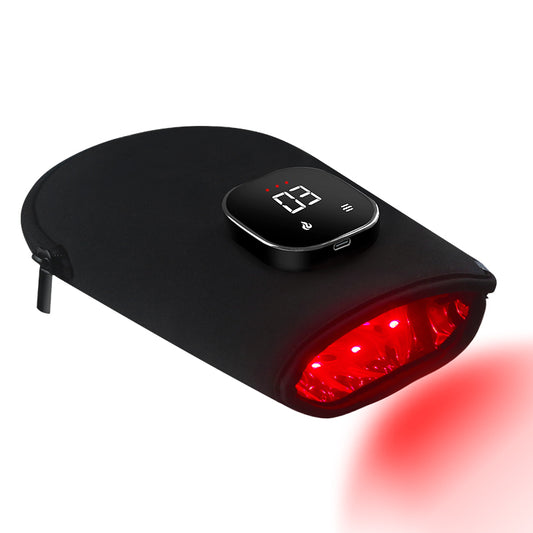 SAVE 20%
SissWrap™ Hand & Wrist
Prix habituel $189.00Prix habituel $189.00 Prix soldéPrix unitaire par$239.0020% -
 SAVE 22%
SissWrap™ Foot & Calf
Prix habituel $279.00Prix habituel $279.00 Prix soldéPrix unitaire par$359.0022% -
 SAVE 32%
SissPad™ 250-LED Pad
Prix habituel $269.00Prix habituel $269.00 Prix soldéPrix unitaire par$399.0032% -
SissPad™ 108-LED Pad
Prix habituel $219.00Prix habituel $219.00 Prix soldéPrix unitaire par


