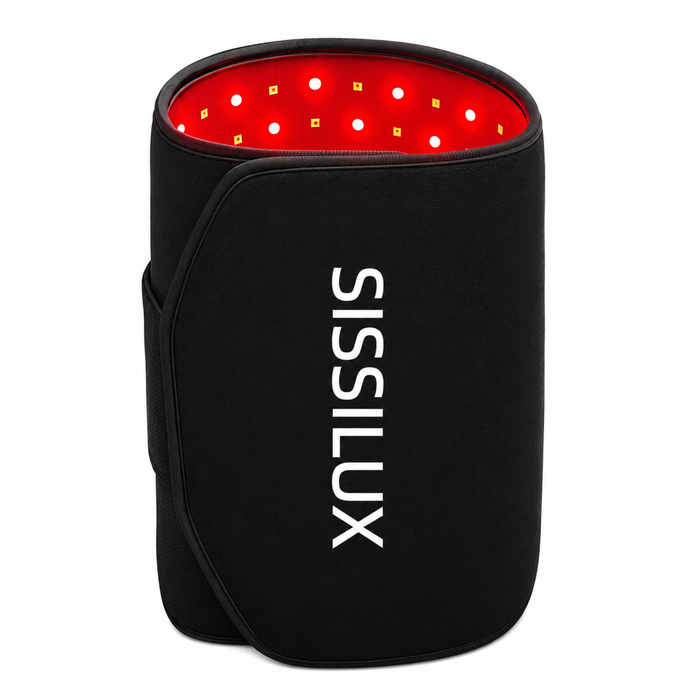
A useful home light session for neuropathic feet combines three things: the intended surfaces face the light, the foot is easy to inspect and the controls are set for the actual model. Start with your foot-care plan, then make that setup repeatable while seated.
PBM studies in diabetic peripheral neuropathy report benefits in symptoms and selected sensory measures. The evidence review explains those findings; this guide focuses on preparation, placement and finishing a home session.
Before you fasten a foot device
- Inspect before covering. Look at the sole, toes, heel and the surfaces that will contact the device. If reaching the sole is difficult, arrange a mirror or help as part of the routine. An open wound, new discoloration or worsening swelling needs your care team’s attention before a session.
- Choose a supported seat. Rest the foot rather than bearing weight through a wrap. Keep the controller and a way to remove the device within reach.
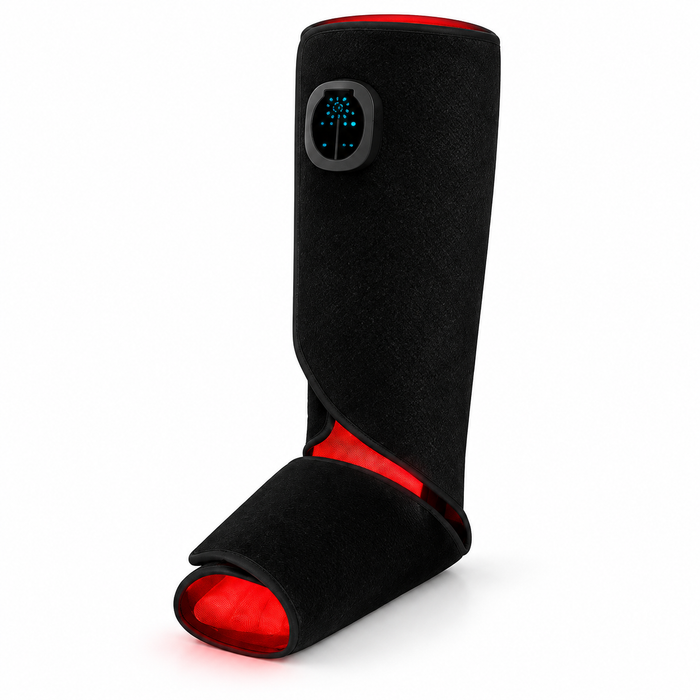
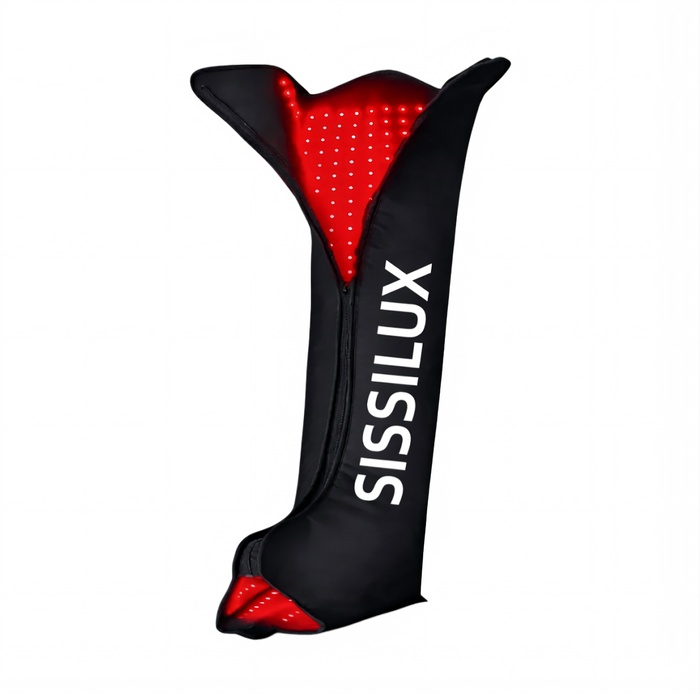
- Find the emitting surface. For a sole-focused session, check that the underside faces the light. Do not infer internal coverage from a glowing exterior photo.
Panel and foot-wrap positioning are different
| Setup | Placement check | What changes the routine |
|---|---|---|
| Panel | Place the intended foot surface toward the panel at its instructed distance. | Exposing both top and sole may require separate positions; use support you can maintain. |
| Foot wrap | Align the emitting interior with the intended sole, heel or surrounding area before fastening. | Keep the fit easy to release and inspect; cordless power does not make it walking footwear. |
| One device for two feet | Complete and inspect one foot before moving to the other, following the model’s directions. | Allow for two setups and verify whether the order contains one device or a pair. |
End the session with an inspection
Use the stop controls, remove the device and check the contact areas for pressure marks, rubbing or irritation. Do not rely on how warm it felt: reduced sensation can change that feedback. Stop a session that causes discomfort or a visible skin problem.
Track the outcome separately from setup: ordinary walking comfort or burning symptoms can be useful observations; sensory and nerve tests belong with your care team. A change in symptoms and a change in nerve function answer different questions.
Choose a device that makes these steps easy
Accessible controls, removable fastening and the ability to inspect both feet can matter more than extra modes. Compare foot wraps, boots and panels if the current setup is awkward. For a seated cordless routine, check SissWrap Foot’s interior coverage and current instructions.